Remake, fantasy colourway, bootleg: three words people use as one
They are not the same thing, and a DreamRemake Yupoo album will show you all three on the same page without labelling any of them. The labels are usually in the album title, the batch note, or nowhere at all — which is why the first thing to learn is how to read the difference off the photographs and the price.
What a remake actually is
A remake starts from something that exists and rebuilds it. In practice that means a dream remake custom piece is usually a retail silhouette re-cut in a heavier blank, or a print re-shot at a larger scale, or a colour that the original house made in one shade and this album makes in four. The construction is the argument: if the seller can tell you the fabric weight, the print method and the stitch count on the neck rib, it is a remake. If the answer to all three is "same as picture", it is not.
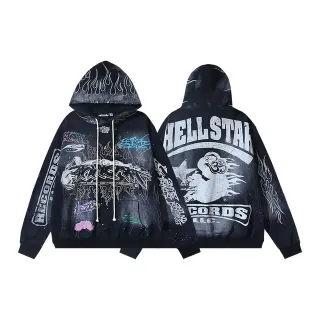
The catalogues worth bookmarking publish remake specs in the listing text, not just in a reply. A hoodie listed at 420 gsm with a two-pass plastisol front and a woven back patch tells you the seller has actually costed the build. Compare that with the graphic-heavy streetwear albums, where the same silhouette is sold as a straight retail match with no reworking at all.
What a fantasy colourway is
A fantasy colourway is a real garment in a colour the original never shipped. Nobody is pretending otherwise, and that is the point — it is a design exercise, not a replica. The tell is the colour story: if the album shows a shoe or a hoodie in a shade that only makes sense as a Photoshop layer, you are looking at a fantasy, and you should expect the final dye to sit one or two shades away from the mock-up. Deep saturated reds and washed-out sage greens are the two most common drift directions.
This is fine. It is only a problem when a buyer pays fantasy money expecting replica accuracy, then posts a complaint when the "wrong" shade arrives. Decide which of the two you are buying before you open the chat.
What a bootleg is, and why sellers avoid the word
A bootleg is a direct copy of a specific existing product, made to look identical, sold as though it were that product. It is the least interesting category and the one with the shortest lifespan, because a bootleg is only as good as its cheapest step. In remake albums the word gets used loosely — sometimes for anything unlicensed, sometimes for a genuinely poor copy — so treat it as a warning about intent rather than a quality grade. If a listing cannot say what it is rebuilding, assume it is copying something and doing it quietly.
Why the mock-up-to-final comparison is the only photo that matters
Most albums show one hero photo. A serious remake album shows two: the flat mock-up the seller built before production, and the garment photographed afterwards on a hanger or a body, under ordinary light, with the print running across a seam. That paired image is the only honest evidence in the listing, because it is the only one that can fail.
Look at three things in the pair. First, placement: does the chest hit sit at the same height once the garment exists, or has it drifted up toward the collar? Second, scale: mock-ups almost always render a print slightly small, so a final that fills more of the chest is normal and a final that looks shrunken is not. Third, colour on fabric: ink on a screen is flat, ink on cotton picks up the weave. If the seller only ever shows the mock-up after you have paid, you are buying a promise rather than a product.
The same logic drives the QC photo guide we keep for standard batches — a photograph you cannot compare against anything is decoration, not evidence.
Lead times: what custom work really takes
Custom work is not slow because sellers are lazy. It is slow because a print has to be set up, a blank has to be sourced in the right weight, and a sample has to be approved before the run starts. In practice, a straightforward single-colour front print on a stocked blank runs 12 to 18 days from confirmed brief to dispatch. All-over prints, embroidery and anything needing a custom dye move to 22 to 35 days. True one-off pieces with a new pattern block regularly run past five weeks.
Two things compress that timeline more than anything else. Approving a sample fast rather than asking for three revisions, and choosing a blank the seller already stocks. If you insist on a specific 480 gsm loopback that the album does not carry, you have added a sourcing step and you should expect to pay for it in both money and days.
Cross-check the dispatch window against the shipping guide before you promise anyone a date. The line-haul leg is separate from the production leg and it does not speed up because the print was quick.
How to brief a remake so it does not come back wrong
Almost every bad remake outcome traces back to a brief that lived in someone's head. Write it down, number it, and send it as one message rather than eleven. Six steps, in this order:
- Name the source garment preciselySilhouette, season, and the exact colourway. "The boxy hoodie" is not a source. A photo of the front, back and neck label is.
- State the change, not the vibe"Same cut, 40 mm taller chest print, left-aligned" gets built. "Make it feel more premium" gets interpreted, and interpretation is where money disappears.
- Fix the blank in numbersFabric weight in gsm, composition, and whether the fit is boxy or regular. Ask what the album stocks before you name a weight it does not carry.
- Choose the print method explicitlyScreen, DTG or embroidery, and say how many colours. Each one has a different cost floor and a different failure mode.
- Approve a physical sample photo before the runOne clear photo of the actual sample on a flat surface, with a ruler or a coin in frame for scale. No mock-up substitutes for this step.
- Confirm sizes, quantities and dispatch date in writingSize run, unit counts, and the ship-by date in the same message. If any of the three is missing, the order is not confirmed.
Send that as a single numbered message and you will get a single numbered reply. Sellers juggling forty chats answer structured messages first, and structured messages are the ones that survive translation.
Reading the album itself
Once the brief is settled, the album becomes a reference library rather than a shop. Two habits help. Search by the construction detail you care about — "420", "puff print", "chain stitch" — rather than by the brand name, because remake albums index by build. And keep a note of the listing date; a remake album that has not added a piece in six months is usually a seller who has moved to a different account, and the photos you are saving may never be produced again.
If the piece you want turns out to be a straight retail match rather than a rework, the NewDP Yupoo drop notes and the JMDY album index are the better starting points. If it is graphic-heavy streetwear with a print you want reproduced at a different scale, the TopHotFashion album sits closer to that brief. The WWTop catalogue is where most of these end up being ordered from, which is why every exit on this page points there.
Ready to order
Take a finished piece instead of a brief
Custom work is the interesting half of this catalogue, but it is not always the right half. If you need something in hand this month, buy from stock and skip the production clock entirely.