

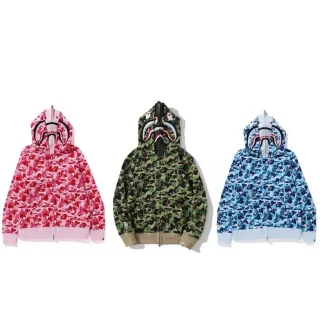
BAPE
Sharkbreeder yupoo · one garment, studied properly
Two listings can carry the same photo of the same hoodie and still ship you two different garments. This is the order in which we look at a BAPE Shark Hoodie album — cheapest check first, so you can stop reading the moment a listing fails.
A hoodie should forgive a lot. A Shark Hoodie does not. The whole front of the garment is a printed face that runs from the collarbone to the crown of the head, and that face only reads as a face when the two halves of the zip meet in exactly the right place. Slide the seam two millimetres and the mouth goes crooked; slide it five and the eyes are looking in different directions. Budget batches almost never fail on fabric weight. They fail on the mask.
That is why the sharkbreeder yupoo albums are studied photo by photo rather than skimmed. A specialist album of this kind is not a shop with a search bar; it is a stack of garment studies — the same hoodie shot flat, zipped, unzipped, hood up, cuff close, tag close. The density is the point. It lets you see the same seam twenty times and notice when one listing does it differently.
What follows is our inspection order. It is not a brand history and it is not a price list. It is a sequence, so if the first check fails you can close the tab without wasting an agent fee.
Start with the garment fully closed, photographed dead-on at eye height, hood lying flat. On a well-assembled example the printed pattern runs across the closed teeth without an obvious break: the panels were cut from one continuous print so the camo, the muzzle and the eye positions line up on both sides of the slider. On a cheap batch the left and right panels were cut separately from a printed roll, so the pattern restarts at the seam and the face is subtly asymmetric. You can often see it in the nose.
The second half of the test is what happens at the top. The mask ends at the crown under a small flap, and the puller should tuck under that flap when the zip is closed rather than sitting proud of it. A puller that stands up like a stub means the zip tape was cut short — it will also mean the hood cannot lie flat when the mask is fully closed, which is exactly the photograph sellers avoid.
If a listing shows only angled, half-open shots, treat that as a negative finding rather than a neutral one. There is no innocent reason to hide a closed mask.
Look at the slider body and the tape stitching where the zip meets the hood opening. A metal slider with a clean, narrow tape and a single row of stitching holding it down is normal on the mid and upper tiers. Wide tape, a plastic slider and a stitched box that wanders off the seam line are the signature of the cheapest assembly, and no amount of correct camo will rescue it.
ABC camo is a three-colour pattern with a large repeat, which is another way of saying that mistakes are legible from a metre away. The shapes are big enough that a seam running through the middle of them either continues the pattern or visibly restarts it. On the body panels, nobody expects a perfect match — retail garments do not do that either. Across the hood's centre seam, with the mask zipped, the expectation is higher.
Photograph-check it this way: find the point where the hood seam crosses the camo, and follow one shape across the stitch line. If the shape arrives on the other side looking like a different shape, the hood panels were cut without pattern matching. That is not automatically fatal on a cheap tier, but it does mean the mask and the camo were cut by two different people, which tells you something about the rest of the garment.
Then check the direction. Sleeves and body should have the repeat running the same way. A sleeve printed at ninety degrees to the body is a cutting-room error that shows up most clearly at the cuff, where the last shape meets the rib.
Camo that is slightly off in the armpit is a cosmetic problem. Camo that restarts across the hood seam is an assembly problem, and assembly problems travel with the whole batch.
Unzip the mask, drop the hood and photograph it hanging from a chair back. This is the least glamorous photo in any album and the most informative. A retail Shark hood has a fused interlining in the front panel: it holds a soft peak and the cavity stays open, so the hood sits like a helmet rather than draping over your ears. Budget batches skip the interlining or fuse it too lightly, and the result is a hood that collapses the first time it leaves the bag.
Three things are visible in a hanging photo. First, whether the front panel has any stiffness at all — you are looking for a faint crease line rather than a dead fold. Second, whether the lining is attached at the crown seam or just at the edges; a lining tacked only at the opening will pull the hood out of shape when you put it up. Third, whether the eyelets sit symmetrically on both sides, because an off-centre pair is a reliable sign the hood was cut from a mislabelled panel.
Ask for the same photo with the hood on a head or a mannequin, if the seller can do it. The mask should close over the face without the fabric puckering at the chin, and the ears should not pull the side panels forward.
The World Gone Mad lettering is the fastest authenticity signal on the garment, because it appears in more than one place and the batches rarely get all of them right. On the hood and sleeve applications you want dense, sharp-edged letterforms with a clean serif and even spacing between the words. Cheap embroidery shows as a lighter, fuzzier fill with the letter edges bleeding into the ground fabric, and the spacing drifts wider toward the end of the line because the machine was pulling the hoop.
Rubber and foil applications are easier to fake and harder to judge from a thumbnail, so look at the edges rather than the centre. A crisp die-cut has a visible, even border of bare fabric; a poor one has ragged edges or a halo where the adhesive crept out.
Neck tag, size tag and the small woven label inside the zip guard should all be legible in one photo. Ask for it. Sellers who can produce a clean tag photo in under a minute are usually working with stock they actually hold; sellers who send a screenshot of the album are not.
Collectors number Shark Hoodies in loose generations, and the numbering is not official — it is a shorthand for visible changes in the pattern. It matters because two albums can both be selling "the" camo hoodie while working from different pattern blocks, and that is not the same as one being a worse copy.
Practically: if you are between sizes, the generation decides the call. A mid-block in your true size behaves like a late block one size down across the shoulders. The Baymax Yupoo size-chart notes explain why a Chinese size run and a European size run can both be labelled L and still differ by four centimetres at the chest.
When two listings pass every check above, stop comparing the garments and start comparing the sellers. The tie-break is provenance, and provenance leaves fingerprints in the photos.
Ask both for the same six angles: closed mask dead-on, hood hanging from a chair, cuff close-up, neck tag, zip puller, and a flat-lay of the whole garment. If the backgrounds, the carpet, the hanger and the light are identical, the two albums are reselling the same factory output and the price gap is pure markup. If the backgrounds differ but the tag stack matches, you are looking at two assembly lines from one factory — usually a small difference in finishing, not in pattern.
Only when the tag stack differs are you genuinely comparing two batches, and then the earlier checks apply again from the top. The QC photo guide is the right companion here: it covers the four questions worth asking of any batch, and they transfer unchanged from a midsole to a hood.
One warning. A seller who answers with a stock photo from the brand's own campaign is not necessarily lying — many resellers use a clean reference shot and a set of phone photos underneath. What matters is that the phone photos exist and that they match the reference. No phone photos, no order.
Eight points, in the order they are worth checking. Photograph each one yourself once the parcel arrives — a checklist you only apply to the seller's photos is half a checklist.
Five pieces from the same streetwear shelf. The Hellstar and Amiri pieces are here because their hood and shoulder construction is a useful control: if one of those feels better made than a Shark Hoodie at a similar price, you have your answer about the batch.
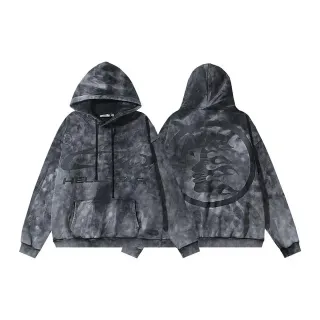
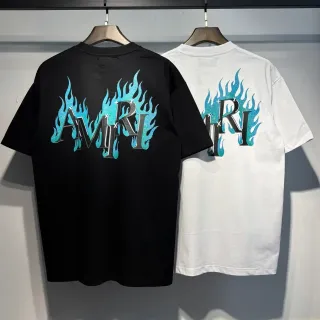

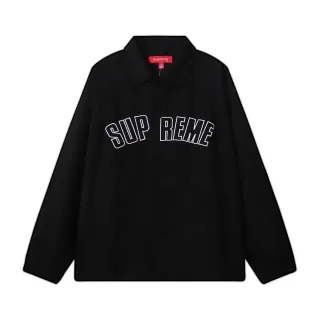
Before you pay
The BAPE shelf sits alongside the rest of the streetwear catalogue, so you can put a Shark Hoodie, a Hellstar hoodie and an Amiri tee in one basket and compare the finishing yourself when the parcel lands.
Links carry ref=yupoo.lifestyle so the shop knows this guide sent you.
Five things people ask before their first order from a specialist album.
The general site FAQ covers agents, sizing and returns; this page stays on the garment.
Yes — one handle, two spellings. Sellers write it as a single word, buyers tend to type it with a space, and both searches land on the same BAPE Shark Hoodie albums. Nothing about the album changes with the spelling.
It is the full-length zip that runs from the chin to the crown, closing the printed shark face. Because the pattern has to continue across two separately cut panels, it is the hardest thing on the garment to assemble well. That makes it the cheapest way to judge a batch.
You can eliminate most bad batches, but you cannot confirm a good one. Photos prove the mask, the camo and the hood structure. They cannot prove fabric weight or how the interlining behaves after washing, so the last step is always a QC photo of the actual garment.
Mostly because of who stands between you and the factory. Identical stock can appear at a thirty percent gap when one seller rides an agent fee on top. Match the backgrounds and the tag stack first; only then is the price telling you anything about quality.
Not if you buy through a shop that mirrors the catalogue and handles QC, packing and shipping itself. With a raw album you carry the swap risk alone, so get the batch name in writing. The shipping guide explains what that costs in practice.