Yupoo tophotfashion · album reading
How a yupoo tophotfashion album moves, and how to read it fast
A trend album is not a worse version of a brand album. It is a different instrument: wide, fast, and edited by whatever the factory sold last week. Once you stop looking for depth and start reading the sequence, the whole thing takes about four minutes.
Trend album vs batch album: two different jobs
A batch album is built around depth. Somebody decided to make one garment properly, so you get eleven photographs of one hoodie, a size chart, a fabric note and a QC set shot on a grey floor. A trend album is built around breadth. Somebody watches what is selling, buys a spread of it and photographs each piece twice before moving on. Neither is dishonest. They are answering different questions, and reading one with the expectations of the other is how buyers end up disappointed.
What makes the yupoo tophotfashion format interesting is that the editing is almost entirely mechanical. There is no copywriter telling you why a piece is good; there is only the order in which items were uploaded. That order is the editorial. The newest items sit at the top because the album is a feed, and the feed is the only signal you get about what the seller believes is moving.
So read it as a feed rather than as a catalogue. Skim the first screen for anything unfamiliar, then work down until the pieces start repeating shapes you have already seen. When the same silhouette appears four times in different colours, you have reached the part of the album that was built to fill space — and you can stop.
New stock or re-upload? Four signals
Trend albums churn, and churn produces a specific kind of noise: the same product returning under a new listing, sometimes with a new price, sometimes with one photograph trimmed. Four signals separate a genuine arrival from a resurrection.
- Position driftA real arrival appears at the top and stays there for a few days. A re-upload jumps to the top for a day, then falls away because nothing is pushing it.
- Lighting indexSellers photograph a batch in one session. If the new listing has the same backdrop, the same shadow and the same crop as an older one, it came from the same session — it is not new stock.
- The price wobbleRe-uploads usually arrive a few percent above or below the original, because the seller is testing a margin. Genuine new stock arrives at a consistent price for the run.
- The photo countNew stock gets the full treatment: two or three frames plus a detail. Re-uploads get one recycled frame, because there is nothing new to photograph.
None of this is proof on its own. Two of the four together is usually enough to call it, and the cost of being wrong is low — you simply wait a week and see whether the listing survives.
Which hot items actually come back
Every trend album has a handful of pieces that get shared around and then vanish. Most of them never return, and the reason is boring: a single cut was made, the panels were consumed, and re-cutting costs more than the seller expects to make. The items that do restock share a set of practical characteristics that have nothing to do with how popular they look.
- Three or more colourwaysA multi-colour run means the factory kept the pattern and the panels. That is a restock waiting to happen.
- Five sizes on the sheetFull size runs imply a cutting plan. A single size is a leftovers sale dressed as a drop.
- Price held steadyRestocks usually cost the same or slightly more. A price collapse in week two is clearance, not demand.
The counter-signal is worth naming too. An item that is everywhere on social media, appears in a trend album with one colourway and one size, and has a price that undercuts the rest of the album is almost never coming back. It was a test cut. Buy it if you like it, but do not build a plan around a restock.
Popularity tells you what the album is promoting. Size runs and colour counts tell you what the factory can actually make again.Working rule
The restock clock
Trend albums run on a two to four day upload cycle, with the heaviest activity early in the week. That is not a cultural detail; it is a logistics one. Sellers consolidate orders, place them with the factory, and photograph whatever arrives back in the same window. If you watch an album for three weeks you will see the rhythm, and once you see it you can stop checking daily.
The rhythm also tells you when not to buy. In the two weeks before Chinese New Year, uploads speed up — sellers are clearing what they can ship before the shutdown — and quality control gets thinner because everyone is rushing. The shipping guide lays out the exact weeks, and the practical advice is simple: an order placed in that window is an order you will not see until March.
Reading a trend album against a stable brand album
The most useful comparison is not trend versus trend. It is trend versus a stable album that has carried the same fifty items for a year. That second album is a control group: it tells you what the base price and the base photo quality look like, so a trend listing that suddenly looks better than everything else stands out.
Put a trend album next to the WWTop Yupoo shelf and the difference is immediate. The stable shelf organises by category and brand, keeps its listings alive, and does not depend on novelty. The trend album organises by time and depends entirely on it. If an item from the trend album also appears on the stable shelf at a similar price, that is the strongest signal in this whole process: it means the piece survived long enough to be catalogued rather than dumped.
For sneakers specifically, the koala yupoo albums do the same job as a control, because batch photography there is unusually consistent. And if you are buying in bulk rather than one piece at a time, the Spanish-language notes on yupoo proveedores cover wholesale minimums that a trend album never mentions.
A weekly reading routine
Five steps, about ten minutes, once a week. This is the whole method; everything above is just the reasoning behind it.
- Scan the top twenty listings. Anything you have not seen before goes on a shortlist, nothing else. Do not stop to read descriptions.
- Check the shortlist for the four re-upload signals. Position, lighting, price wobble, photo count. Drop anything that fails two.
- Pull the size run and colour count on what is left. Three colourways and five sizes is a restock candidate. One of each is a test cut.
- Cross-check the survivors against a stable album. If the piece also exists there, you have a long-runner rather than a flash item.
- Write down the price and the date. Next week you will be able to see a restock, a rise or a quiet clearance without having to remember anything.
Repeat the loop for three weeks and the album stops feeling chaotic. It becomes a moving strip of decisions, and you will be able to predict roughly when the next one arrives.
Questions
What exactly is a trend-driven album?
One that follows demand instead of a production line. New pieces appear weekly, usually in the same two or three frames, and the catalogue is wide but shallow. You read it by upload order and restock behaviour, not by how deep the product pages go.
How do I tell new stock from a re-upload?
Photo session and price. A re-upload reuses the original backdrop and crop, arrives a few percent above or below the old price, and usually shows one frame instead of three. Real arrivals come in a group with consistent lighting and a consistent price.
Do the most shared items restock?
Not reliably. Restocks happen when the factory kept the pattern and the size run, which shows up as stable pricing and three or more colourways. A viral piece with one colourway and one size is usually a single cut that will not return.
How often should I check?
Once a week is enough. The upload cycle is two to four days, so a weekly pass catches every restock without turning this into a daily habit. Check twice a week only in the fortnight before a seasonal change, when the album moves faster than usual.
Pieces that show the pattern
Six current listings, chosen because each one demonstrates something the article describes: a multi-colour run, a long-runner carrying over between seasons, and a single-cut novelty.

Multicolor Graphic Oversized Hoodie
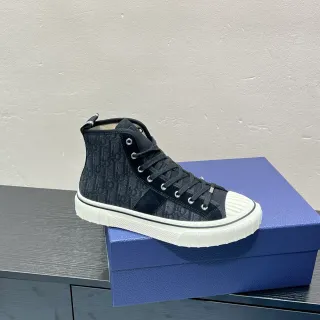
B27 Monogrammed Canvas High-Top
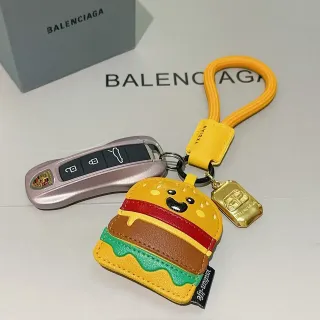
Burger Leather Keychain

Pink Horse-Charm Braided Strap Bag

Solo3 Mickey Mouse Headphones

Superstar Glitter Star
Skip the churn
One shelf that keeps its listings alive
If reading a feed every week sounds like work, the alternative is a catalogue that keeps the same pieces in the same place — new arrivals at the front, everything else still findable.
Links carry ref=yupoo.lifestyle so the shop knows this guide sent you.