Reference index
JMDY Yupoo: find a listing by its album code
A code lookup for people who already know what they want and are tired of scrolling a photo wall to find it. Search the string, not the name — that is the whole method, and the table below is how it works.
colourway · batch
| Code position | Example | What the code tells you |
|---|---|---|
| Prefix | JMDY · JM- · DP |
The album family. A prefix change usually means a different seller account behind the same photos, not a new product line. |
| Category block | BG bags · SH shoes · AP apparel |
Two letters that place the item on a shelf. This is the block that decides whether you are looking at a jmdy yupoo bags listing or a jacket. |
| Colourway suffix | -BK black · -BG beige · -NV navy |
The last two characters. Easy to misread against the category block when both use the same letters, which is the most common copy-paste mistake in ordering. |
| Batch marker | V2 · NEW · TOP · no suffix |
Quality tier or revision. No suffix is not a flaw — it usually means the original run is still current and has never been revised. |
How album codes actually work
Every JMDY listing carries a string in its title, and that string is doing four jobs at once. It identifies the album family, the category, the colourway and the revision. None of that is standardised across sellers, which is exactly why reading it correctly is a skill rather than a lookup — the same two letters can mean bags in one album and black in another.
What is consistent is the ordering. Prefix first, category second, colour third, batch last. Once you internalise that shape you can decode an unfamiliar string in about four seconds, even if the specific letters are new to you. The table above is the reference; the rest of this page is how to use it.
Why the batch marker is the block people ignore
Buyers fixate on the product name and skip the suffix, then wonder why two links to "the same" bag show different hardware. Those are different revisions. A V2 on a strap generally means the attachment point was reworked after complaints; a TOP usually means a heavier leather or a hand-finished edge; no suffix means the item has never been revised and the photos are the original run. None of these are strictly better — a V2 can introduce its own problems — but you should know which one you are buying before the order is placed.
This is where a jmdy yupoo review is worth reading rather than skimming. Reviews of a specific revision age badly; reviews of how a seller handles a revision complaint stay useful for years.
Search an album by code, not by product title
Product titles in these catalogues are translated, re-translated and often assembled from a brand name plus a generic noun. Searching "black leather tote" inside an album returns hundreds of results and ranks them by nothing useful. Searching the code returns one.
Three practical rules make code search reliable:
- Search the suffix alone. If you know the item is
-BGand revisionV2, searchBGV2orBG V2. Broadening from a known ending is faster than guessing a prefix. - Try both spacings. Sellers write
JM-BG-041,JMBG041andJM BG 041for the same item in the same album. A hyphen-free search catches more. - Search the album, then the store. The album is the authoritative index. If a code does not exist there, a shop listing showing it is a mirror that has drifted.
The same approach works on NewDP, where codes tend to be shorter and drop-focused, and on Yishan, where the numbering is closer to a sequential SKU list. If the code you have does not resolve anywhere, the suppliers index is the fastest way to find which album family it belongs to before you spend another twenty minutes searching.
What a JMDY listing usually contains
A well-built listing has five parts and a lazy one has two. Knowing which you are looking at saves a round of messages.
The five parts worth checking
- The code string, ideally in both the title and the first line of the description so a search catches it either way.
- A full set of angles — front, back, base, interior and one close-up of the hardware or the print. A listing with four near-identical front shots is hiding the sides.
- Measurements in centimetres for bags, or a flat-lay measurement for garments. Not "medium". Numbers survive translation.
- Material and hardware notes — leather type, lining, whether hardware is plated or solid, and the colour temperature of the metal.
- A batch note, even if it only says "same as last run". Silence on batch is itself information.
When a listing has parts one and two only, it is a photo index rather than a product page. That is normal for this ecosystem and not automatically a red flag — but it does mean every question you would normally answer from the page becomes a message you have to send.
How to verify a listing is still in stock
Stock status is the weakest signal in the entire catalogue system. An album photo stays up whether or not the item exists, because removing it breaks every old link pointing at it. So treat "the page loads" as evidence of nothing except that the page loads.
- Check the upload date first. Listings older than a season on a fast-moving album are the most likely to be gone. A date stamp near the top of the album is worth more than a stock badge.
- Ask for a timestamped photo. A photo of the actual unit with a handwritten code and today's date settles the question in one message. Sellers who routinely do this are the ones worth keeping.
- Confirm the revision, not just the item. "In stock" against the wrong batch is worse than out of stock, because you only find out after it ships.
- Ask about size or colour splits. An album can hold the black one and not the beige. Stock lives at variant level, never at listing level.
- Get the answer in writing. Screenshots of a chat are not a commitment; a written confirmation of code, variant and dispatch window is.
One more habit: verify on the day you pay, not the day you decided. Albums move weekly, and a stock confirmation from eleven days ago is a historical document.
Where ordering actually happens
The album tells you what exists. It cannot take your money, cannot hold a unit and cannot tell you what shipping will cost. That step happens at a store that mirrors the catalogue, which is what the WWTop catalogue does — and it is why every store link on this page goes to one destination rather than a dozen half-dead album URLs.
If you are ordering a bag specifically, the QC photo guide covers what the inspection shots need to show: stitching pitch on the strap, hardware engraving depth, and whether the interior lining sits square to the base seam. Those three checks catch most of the failures that are expensive to fix later.


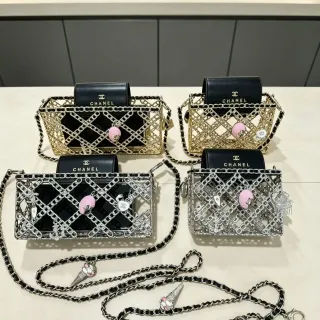
Reading the album as an index
Once codes make sense, the album stops being a shop and starts being a reference sheet. Two things follow from that. First, you can compare sellers on the same code: if two albums both carry JM-BG-041-BGV2 and the photographs differ, you are looking at two different factories claiming the same identifier, and the photographs are the only arbitration you have.
Second, you can tell when an album is being maintained and when it is being abandoned. A maintained album adds codes at the top of the sequence, updates the batch suffix when a run changes, and keeps its measurements current. An abandoned one has a wall of photos with dates from eighteen months ago and no new suffixes. That distinction matters more than any review, because an abandoned album still takes orders.
For the broader picture — which album families sit alongside this one and how they differ — the suppliers index is the map, and the site FAQ covers the ordering questions that come up before any of this becomes relevant.
Four questions that come up most
Is jmdy yupoo the same as yupoo jmdy?
Yes. It is one album family written two ways, and both search forms lead to the same catalogue. The reversed form is common because people type the platform name last when they are already thinking about the item.
What does a code with no suffix mean?
Usually that the item has never been revised, so the photographs you are seeing belong to the only run that has existed. That is not worse than a V2 — a first run that never needed correcting is a good sign. It does mean you have no second version to compare against, so ask for a current photo of the actual unit.
How do I find a jmdy yupoo bags listing I saw months ago?
Search the code, not the description. If you did not save the code, search the album by the category block and the colourway suffix together, then narrow by upload date — the listing will be somewhere in that window. If the album no longer returns anything for the string, the item has been pulled rather than moved.
Can I order straight from the album?
No. The album has no cart and no checkout. You order through a store that mirrors the catalogue, which is why this page routes to a single destination instead of scattering links across dead album URLs. Confirm the code, the variant and the dispatch window in writing before paying.
Before you send the code
The last step is the least glamorous and the one that prevents most problems: paste the code back to the seller in full, with the variant and the size, and ask them to confirm it matches what you think you are buying. A code is a compressed instruction, and compression is where meaning gets lost. One confirming message costs nothing and closes the gap between a string in a title and a parcel on its way.
Code checked?
Order from a shelf that is actually stocked
Once you have the code and the variant confirmed, the store side is the easy part. Bags, shoes, apparel and accessories in one catalogue, with stock checked before dispatch rather than after.
Every store link carries ref=yupoo.lifestyle so the shop knows this index sent you.