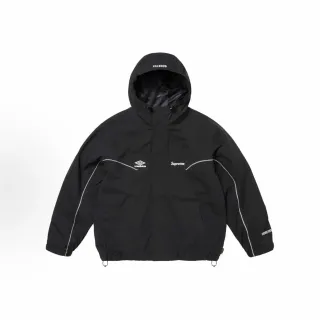
Layer 3
Shell
A hardshell with no fill. Wear it over down on wet days when a parka shell would soak through.
See the shell →Topgoosey yupoo · outerwear only
An outerwear album is the one place in this whole catalogue scene where a number is worth more than a photograph. Fill power, grams per panel and shell thickness decide whether a jacket is a real winter coat or an expensive windbreaker. Here is how to read those numbers before you wire anything.
Almost every argument about a down jacket on a forum starts by quoting one of these two numbers and ignoring the other. They describe different things. Fill power measures how much volume one ounce of down occupies — 650 fills a given space with more grams of feather than 800 does. Fill weight measures how much down is actually in the garment. A 400-gram jacket at 650 fill is heavier and warmer against the body but bulkier; a 300-gram jacket at 800 fill is lighter for the same warmth but costs more per gram and collapses faster when wet.
When an album lists a fill number, the useful follow-up is: grams or power? Sellers often quote the more flattering of the two. A listing that says "800 fill" without saying how much is in there tells you the down is good and nothing about whether the jacket is warm. A listing that says "450 grams" without a fill power tells you the jacket is stuffed and nothing about whether it will loft back after a season in a bag.
"Fill power, grams per body panel, and grams in the sleeves." Sleeves are usually under-filled relative to the body, and a seller who knows the sleeve number knows the factory.
"Expedition grade", "arctic tested", "same factory as". These are marketing phrases with no fixed meaning. A weight and a fill power can be checked; a mood cannot.
Practical anchor: a genuine city parka for a European winter sits around 300 to 380 grams of 700 fill. Below 200 grams you are buying a fashion layer that works to about freezing with a hoodie underneath. Above 450 grams in a hip-length jacket you are into expedition territory, and you will feel it walking to the station.
Down is only half the jacket. The shell decides whether the wind gets in, whether the garment sounds like a crisp packet, and whether it survives a season of bus seats. Retail parkas in this family use a matte, slightly stiff nylon-cotton blend that creases along the sleeve rather than draping. Cheap shells are either shiny polyester with a loud rustle or a soft twill that feels lovely in the hand and lets wind straight through.
Ask the seller to do three things on camera, and watch the fabric rather than listening to the description. Crush a sleeve in a fist and release it: a good shell recovers with soft, shallow creases; a cheap one leaves a hard crease that stays. Hold the cuff under a running tap for five seconds: water should bead and roll, and the inside of the cuff should still be dry. Finally, hold the jacket up to a window: if you can see daylight through the quilting channels, the shell is thin and under-filled.
The matte finish is also a useful tell on the copy side. A shell that photographs shiny under a phone flash will look shiny in daylight, and no amount of correct badge work makes that read as the original.
The circular disc badge on the sleeve is the single most photographed detail on any jacket in this family, which is unfortunate, because it is also the easiest thing to fake well. The differences live at the edges. On a properly embroidered badge the outer ring is a continuous satin stitch with even tension: no gaps, no thread loops, and a clean join where the ring closes. The inner lettering should be dense enough that the background fabric does not show through the middle of the letters, and the maple leaf, where present, should have distinct points rather than a blob.
Look at how the badge is attached before you look at the badge. A patch sewn on with a visible, even stitch line all the way round is a different operation from one heat-pressed with two tacking stitches. Both exist, but a seller who can show you the reverse side of the sleeve is showing you a garment they actually have in hand.
Interior labels photograph badly, so sellers rarely volunteer them. Ask anyway. A clean, straight label with legible type and a consistent size designation is a low-effort quality signal: nobody bothers to fit a good interior label to a bad shell.
Real coyote trim is expensive and behaves in a specific way: the guard hairs are long, uneven and slightly coarse at the tips, the undercoat is dense, and the whole strip has a natural drape with a visible direction of growth. Faux trim is uniform — same length, same sheen, same direction — and it usually has a stiff stitched backing you can feel through the fabric.
Most albums in this price band photograph a fur-trimmed hood and ship a removable trim, sometimes synthetic. That is not necessarily a problem, but it changes what you are buying. Ask two questions: is the trim removable, and what is it made of. If the answer is "faux", the price should reflect it.
A trim that sheds when you pull it gently between two fingers will keep shedding all winter. Test it in the QC photos by asking for a shot where the trim has been brushed against the nap.
Four checks, in order, before you cut the tags. Total time: about half a minute, and it catches most of what a photo cannot show.
Use this as a sanity check on any listing. If a seller claims an expedition parka and the numbers land in the bomber row, the numbers are the truth and the label is decoration.
| Jacket type | Fill weight | Fill power | Best temperature range | Notes |
|---|---|---|---|---|
| Cropped down puffer | 180–220 g | 650–700 | 8 °C to −5 °C | Fashion layer. Fine over a hoodie, not a stand-alone winter coat. |
| Bomber / short flight jacket | 280–340 g | 650–675 | 0 °C to −15 °C | Warm core, cold arms if the sleeves are under-filled. Ask for sleeve grams. |
| City parka, hip length | 300–380 g | 700–750 | −5 °C to −20 °C | The sweet spot for most European and North American winters. |
| Long expedition parka | 380–450 g | 675–775 | −15 °C to −30 °C | Heavy and bulky. Overkill below 60° latitude, useful above it. |
| Down gilet | 120–160 g | 700 | 10 °C to 0 °C | Layering piece. Packs to nothing, warms only the core. |
| Shell, no fill | 0 g | n/a | 12 °C to −5 °C | Depends entirely on what you wear underneath. Wind and rain only. |
Convert before comparing: 0 °C is 32 °F, −20 °C is −4 °F. A jacket rated to −20 °C is comfortable standing still and too warm walking uphill.
Outerwear is the one category where ordering late is worse than ordering a mid-tier batch. Factories cut parka runs in late summer and fill them through September; by November the good sizes are gone and what remains is a re-cut using whatever shell was in the building. The cold snap that makes you want the jacket is also the moment every other buyer wants it.
If you are ordering in December, budget the delay rather than fighting it. The shipping guide has the week-by-week picture, including the quiet period around the holiday factory shutdown.
Outerwear only works as a system. These are the shells and mid-layers we use to test a parka — if the parka cannot be worn over the hoodie, the sizing is wrong regardless of what the chart says.
A hardshell with no fill. Wear it over down on wet days when a parka shell would soak through.
See the shell →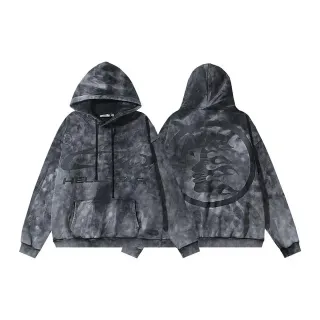
The sizing reference. A parka should close over this without pulling at the chest.
See the hoodie →
Cotton, not synthetic. It is what stops a down jacket feeling clammy on a long walk.
See the tee →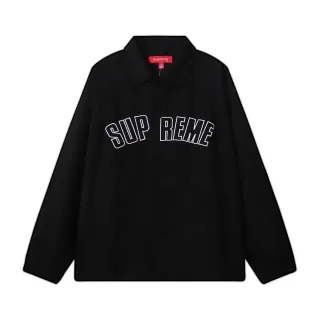
Order before the cold snap
Outerwear sits next to the hoodies and tees you would actually wear underneath it, which makes the sizing question a lot easier to answer than a chart on its own.
Links carry ref=yupoo.lifestyle so the shop knows this guide sent you.
Four answers that keep coming up around parka season.
For bags and hardware, the Yishan Yupoo notes apply the same logic to leather.
Total down weight in the garment — not the weight of the jacket. Two parkas can both carry 400 grams and perform differently if one uses 650 fill and the other 750, because fill power says how much space each gram occupies. Ask for both numbers or the figure means very little.
Allow three to five weeks door to door through an agent, longer in the fortnight before Chinese New Year. September for a November cold snap is realistic. December for that same cold snap is optimistic, and the QC tends to get rushed as the factories clear orders.
Assume synthetic unless the listing says otherwise in writing. Real trim has uneven guard hairs and a natural drape; faux is uniform and stiff-backed. Either is fine if the price matches, but a listing that shows fur and ships a thin trim is the one to avoid.
Size to the layer you will actually wear. Measure a jacket you already own across the chest and compare it with the flat measurement the seller publishes. If an album only offers S to XL with no centimetres, ask for the chest width in writing before paying.